How to Upload Files to Box Using Box Shuttle
Box Cloud FastPath is a applied science that cease-users and subscribers to the Box deject storage service may not know well. This is understandable, as FastPath works backside the scenes to assist Box efficiently move vast volumes of data.
Large companies and enterprises that need to move pregnant numbers of files to the Box servers volition appreciate the level of performance they receive with Box Cloud FastPath equally part of Box Shuttle.
What Is Box Cloud FastPath Anyhow?
Box Cloud FastPath serves to migrate pregnant amounts of data from end-users into the cloud efficiently, quickly, and cost-finer.
Organizations that have legacy in-firm storage servers are common customers for FastPath. They use this loftier-speed and secure data migration service to motion many terabytes of data from the servers into the cloud. However, any system that needs to drift large amounts of data can use Box Cloud FastPath.
This software as a service (SaaS) product attempts to simplify data movement betwixt systems that normally would not communicate easily with each other.
Retrieve of Box Deject FastPath as the service that allows these disparate storage systems to communicate and share data with each other. Users can transfer a number of items through Box Deject FastPath, including:
- Files
- Folders
- File attributes, like metadata and permissions
How Box Deject FastPath Developed

Box caused Deject FastPath (CFP) in early on 2021, so in its current format, Box Cloud FastPath is a relatively new formation.
But the two companies had a working relationship for quite a while before the acquisition. Box used Cloud FastPath engineering for several years, most recently with Box Shuttle.
With the Box acquisition of Deject FastPath, CFP users at present have the option of storing their data in the cloud directly with the Box service.
History of Deject FastPath
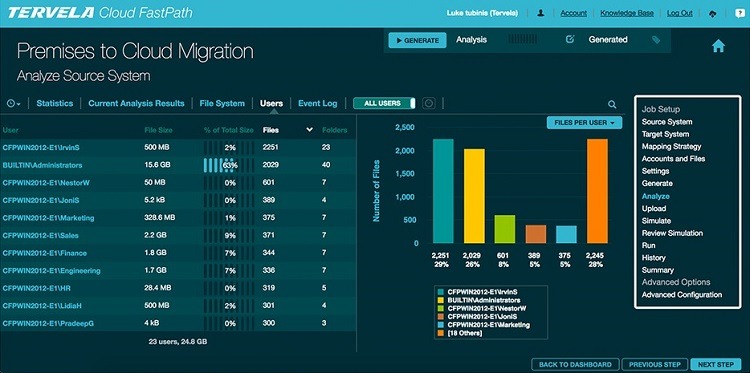
Cloud FastPath was a standalone company for almost two decades before Box acquired it. It started in 2004 under the name Tervela.
In 2015, Tervela launched Cloud FastPath, which focused on migrating large amounts of data from on-bounds file servers to the cloud. Tervela rebranded its company proper noun as Cloud FastPath a few years later.
Cloud FastPath had partnerships with huge engineering companies similar Box, Dropbox, Google, Egnyte, and Microsoft prior to Box'southward acquisition.
These big companies rely on services like Cloud FastPath to brand the movement of significant amounts of data possible in a more efficient way. Moving this type of data is not a simple procedure, as it tin can involve tens of millions or hundreds of millions of files.
How Box Cloud FastPath Works
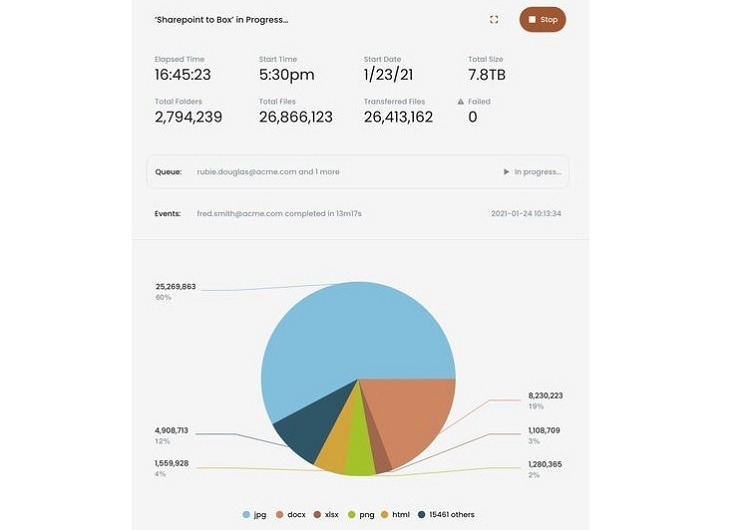
Box Deject FastPath uses a few dissimilar technologies to handle the migration of the data.
Assay and Simulation
Cloud FastPath tin run an analysis of how the information migration will work, ensuring all parties understand how the procedure will go. The assay helps customers create a migration plan based on actual information.
If desired, Box Cloud FastPath tin also run a simulation of the migration procedure before undergoing the actual information transfer. This simulation may help an arrangement spot any potential hiccups in the migration plan earlier starting the actual transfer. Box Deject FastPath will generate reports about the simulation, merely as it does during the bodily migration.
CFP Service
The Deject FastPath (CFP) service manages the overall migration process.
The software beginning ensures that the source and target are ready to handle the migration. It then starts the migration process, monitoring the progress in almost an oversight fashion.
Throughout the migration action, the CFP service volition create inspect logs that testify successful file migrations and any errors that occur. This software also will generate reports that runway the overall progress of the migration.
CFP Virtual Machines
Cloud FastPath virtual machines, likewise called POPs (points of presence), will exist near all of the data sources involved in the migration. Some other CFP virtual machine will exist near the target location for the migrated data. These POPs will work for on-premises servers, personal computers, cloud storage systems, and other sources of information.
These virtual machines perform 3 primary tasks, including:
- Accessing the data from the sources
- Encrypting the data using standard RSA keys before the migration begins and decrypting the data once the migration finishes
- Controlling the data while it'south in transit and passing it to the target
As the data moves from the source to the target, it follows standard UDP (user datagram protocol) and TCP-IP (transmission control protocol/internet protocol) standards.
How Box Shuttle Works

With Box's conquering of Cloud FastPath, Box Shuttle gained some new features.
For example, Box Shuttle now provides a cocky-service option, where organizations can perform all aspects of the migration independently. For groups with meaning security requirements, this might be the nigh useful selection.
Additionally, some customers at present volition be able to use Box Shuttle'due south services for free, potentially including those migrating less than 10 terabytes of data. Others will have an additional fee beyond the Box subscription pricing tier they're already using. Customers seeking to use Box Shuttle with FastPath volition need to contact Box for a price quote.
Hither are some specific examples of how Box Shuttle customers make use of Deject FastPath
Example #ane: Retiring Data Storage Servers
When a visitor seeks to move its content from legacy systems relying on data storage servers to the cloud, moving files efficiently and safely is cardinal.
No company tin can afford to have hours or days of reanimation where files are inaccessible during the migration to the deject. Through Box Cloud FastPath and Box Shuttle, customers are able to move massive amounts of data efficiently and quickly. They typically tin can maintain access to the files from the original source as well until the migration ends.
Moving Information Deeply for Intuit
When Intuit began using Box Shuttle to handle its information, it could retire more than 10 file servers. The fiscal services provider had 37 terabytes of data in more eight million files to migrate through Box Shuttle and Cloud FastPath.
These files covered a variety of customers, including small businesses, large businesses, and individuals. When moving them, Intuit needed to ensure that all of the permissions and user data remained every bit part of the original files.
Intuit had a goal of providing a centralized means of giving its employees and customers admission to those millions of files. As an added layer of complexity, Intuit needs to be able to onboard seasonal tax preparation employees, giving them access to the files for a few months.
Additionally, Intuit needed significant security measures deployed on each of these files, as many of them contained financial information and sensitive user data.
Box Shuttle's ability to efficiently movement huge amounts of data through Box Cloud FastPath allowed it to handle the basic parameters of the task. Box's encryption rules worked well for Intuit, which chose to maintain independent control of its encryption keys through Box KeySafe.
Box Shuttle can move content from more ten different locations simultaneously. It maintains metadata information and version histories of files. Both of these features were ideal for Intuit's needs.
Example #2: Gaining Mobile Access to Files
When an organization expects its employees to exist able to access information anywhere and at any time, having data siloed on local servers doesn't work well.
Moving this information onto a cloud storage system simplifies access to the information. With the Box app, mobile users can access files easily on a smartphone, tablet, or laptop when they're out of the office.
Moving Data for the U.S. Forest Service
The U.S. Wood Service turned to Box Shuttle and Box Deject FastPath to migrate more than 163 million files to the cloud. These files consisted of more than 160 terabytes of data.
The Forest Service sought to button these files into the deject to give those working in the field the power to easily receive important information on mobile devices. These people may include state direction officers, firefighters, and campground managers.
Dissimilar departments in the Forest Service can employ the centralized storage of the files in the cloud to promote improved collaboration. They tin can share maps or put together emergency response plans, which then are available to any employee with access to the Box cloud.
Using Box Shuttle allows organizations to put together a strategy for the deject migration procedure, which was important for the U.Due south. Wood Service. The service needed to make certain the files maintained their governmental compliance requirements for data protection.
Example #iii: Gaining Admission to Archived Content
When a company has data archived on local servers, it is sometimes difficult to give employees access to it. Depending on the company's search parameters on its archived servers, some of these files may not show up when employees look for them. Additionally, some archived servers may be in a silo, preventing admission for some employees.
By migrating all currently used files and archived files to the cloud, employees can use Box's search tools to find but the file they demand.
Moving Data From Multiple Sites for Coalfire
Coalfire turned to Box Cloud FastPath and Box Shuttle to requite its employees access to the visitor's archived files. Deject FastPath moved these files apace and securely.
Coalfire ensures secure information storage for its customers while helping them avoid cybersecurity problems. The conclusion to use Box gave Coalfire the ability to utilise compliance and security parameters to all of the files in motion.
In addition, Coalfire had an extra layer of complexity to its situation. Coalfire stored its content on several chiliad Microsoft SharePoint platforms. SharePoint serves every bit a document management and storage system.
Through Cloud FastPath, Coalfire was able to shop all of the data in the Box cloud, simplifying the procedure of finding files for all employees. By centralizing the files through Box, employees at Coalfire gained the power to track down files with Box, rather than going through private SharePoint sites.
With its use of Box Shuttle and Box Cloud FastPath, Coalfire also decided to deploy Box KeySafe and Box Governance for additional security and compliance assurances.
How to Get Started With Box Cloud FastPath
To start using Box Cloud FastPath and Box Shuttle, organizations can make utilise of the post-obit steps.
Footstep 1: Determine the Organization's Content Migration Needs

Box recommends using Cloud FastPath only when the amount of data will be quite large, ordinarily more than one terabyte.
Additionally, Box recommends Box Shuttle and Cloud FastPath when the organization has more than than 100,000 files to drift.
With fewer files to migrate or with a smaller amount of data, Box recommends using Box'southward synchronization feature, drag-and-driblet techniques through the Box app or spider web version, or using an FTP site.
Certainly, organizations with less than one terabyte of data or 100,000 files tin can use Box Shuttle and Cloud FastPath. However, Cloud FastPath'south maximum efficiency occurs with larger amounts of information.
Step 2: Setting the Parameters of the Migration
In one case an arrangement decides to utilize Cloud FastPath, it will need to take a few steps to set up the migration process.
- Determine Data Sources: Those using Box Cloud FastPath and Shuttle can pull data from locations like local servers and computers, content management systems, and other deject storage systems.
- Select Files to Migrate: Organizations may have specific sets of files they don't desire to migrate with Box Cloud FastPath. The team may demand to purge some files or archive them earlier starting the migration of the other files.
- Migrating File Attributes: With Box Cloud FastPath, customers can cull to maintain some of the attributes of the files involved in the migration. These may include metadata, user permissions, and any custom attributes the arrangement uses.
- Install Any Needed Tools: When pulling data from local servers, the organization may need to install some software from Box first. This software helps Box Cloud FastPath manage the connection required for the migration.
- Plan for Content Access: During the migration, Box Cloud FastPath recommends that users access any content files they need from the source. They should non access content from the area in Box where the migrated files will exist until the migration finishes completely.
Footstep 3: Agreement Box Deject FastPath'due south Filename Limitations
Box requires filenames that practise not use certain characters for the migrated files. These banned filename characters include:
- Backslash
- Forward slash
- Quotation mark
- Less than or greater than signs
- Asterisk
Earlier starting the migration, the arrangement must remove these characters from all filenames.
Additionally, folders should accept fewer than 10,000 files to receive the highest possible level of performance during migration. (Folders can have up to 15,000 files without creating an error during the migration, though.) No binder name should have more than 100 characters. The system should gear up whatsoever problems like this earlier starting the process.
Footstep four: Understanding Limitations Based on Pricing Tier
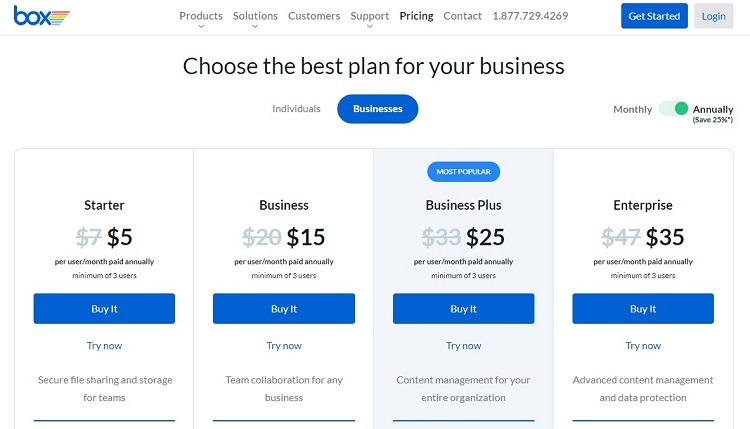
Additionally, those using Box Cloud FastPath volition have to attach to whatsoever limitations for file size and total data specified in the organization's pricing tier. Box pricing tiers include:
- Starter: The Starter tier allows up to 100 GB of storage space and tin can handle a file size of up to two GB. A file's version history tin can store upwardly to 25 versions. The Starter tier starts at $five per user per calendar month.
- Business: The Concern tier has an unlimited total amount of storage available. File sizes have a limit of five GB for upload. This tier will store up to fifty version history copies. The Business tier starts at $xv per user per month.
- Business Plus: This tier has the aforementioned storage limitations as the Business tier. The Business organization Plus tier starts at $25 per user per month.
- Enterprise: The Enterprise tier offers unlimited storage and will accept a file size of up to 12 GB. Users can maintain 100 version history copies of a detail file. This tier starts at $35 per user per calendar month.
Step 5: Migrating the Files
After determining the parameters for migrating the data, organizations can cull whether they desire to manage the migration on their own through Box Cloud FastPath, Box Shuttle, or both Box also offers a service chosen Box Consulting to assistance in the migration process.
With Box Consulting, the Box team will assistance with setting upwardly the migration plan. Box Consulting volition give the organisation a series of milestones to follow during the migration process. These milestones provide the organization peace of mind that the migration is occurring as expected.
Additionally, Box Consulting focuses on making plans to minimize any user disruptions during the migration process.
The time required for the Box Cloud FastPath and Box Shuttle migration process tin vary from a few days to several months. The migration speed depends on the number of files involved and whatsoever limitations the organization has. For example, if files can but move at certain hours of the day, this will slow the process.
During and after the migration, Box volition keep organizations updated with the progress through various reports.
Source: https://nira.com/box-cloud-fastpath/
0 Response to "How to Upload Files to Box Using Box Shuttle"
Post a Comment